
Routines & Chores
Short draft · full article comingA school morning routine that gets everyone out the door on time
Five steps, a buffer, and a leave time everyone can see. Example routines for preschoolers to teens.
The FamilyOrganization.app team
Published Updated 3 min read
Placeholder — the full article is coming
This is a short stock draft. It stands in until the full article, written from our research brief, replaces it in October 2026. Until then this page is hidden from search engines, and it has no named author.
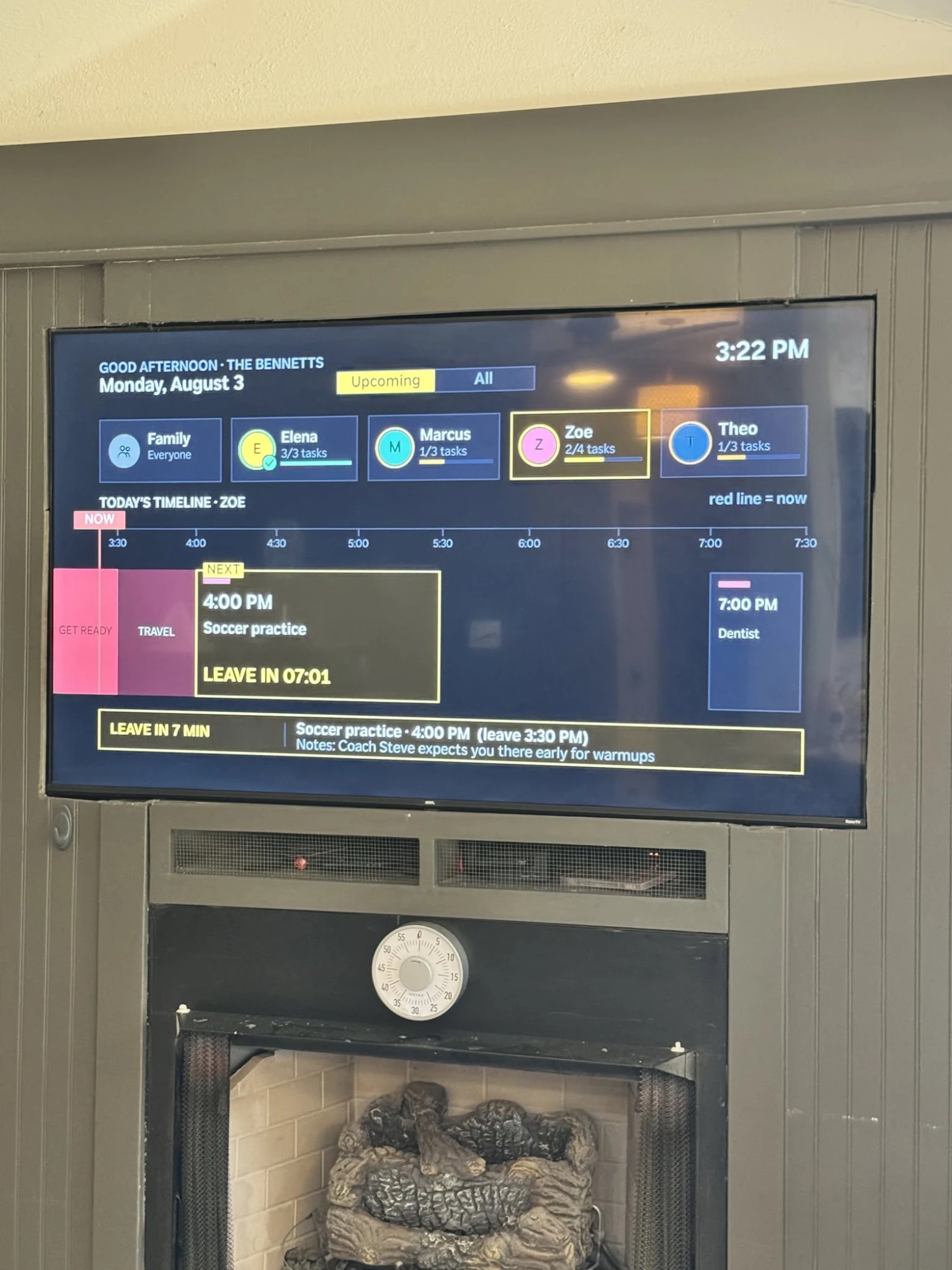
A morning routine for kids works when every step has a place in the same order, the total includes a buffer, and everyone can see when you need to leave. Below are a five-step checklist, example routines by age and a way to get out the door on time. This guide is from FamilyOrganization.app, the family organizer on the TV you already own, with an ADHD-friendly visual timeline for each person (Roku now; Apple TV, Fire TV and Google TV coming).
What are 5 daily routines for a school morning?
The five routines most school mornings need are: get up and get dressed, eat breakfast, brush teeth and wash, pack the school bag, and put on shoes and coat. Keeping them in the same order every day means kids don't have to decide what comes next, which saves arguments and time. Pick an order that suits your house, then keep it. If your child finds mornings hard, move anything you can to the night before: lay out clothes, pack the bag, and put shoes by the door. Give each step a rough number of minutes so you can add them up and see how long the morning really takes. Mornings often take longer than they feel, so add a buffer, which we call GET READY time: the prep time before you walk out. Put the routine where your child can see it, as a picture chart for young children or a checklist for older ones.
What is an example of a checklist?
A checklist is a short list of steps you tick off in order. Here is a school-morning example you can copy:
- Get up and get dressed
- Eat breakfast
- Brush teeth and wash face
- Pack school bag, lunch and water bottle
- Shoes, coat, out the door
On FamilyOrganization.app, routines like this reset every morning, and kids check off their chores with the TV remote, so they don't need a phone or tablet.
Example morning routines by age
These are starting points, not rules. Time your own mornings for a week and adjust.
| Age | What they can do alone | What helps |
|---|---|---|
| Preschool (3-5) | Dress with help, eat, brush teeth with a parent; follow a picture chart | A picture chart and a parent nearby |
| Ages 6-9 | Dress, eat and brush teeth alone; pack the bag with a reminder | A tick-off checklist and a visible leave time |
| Ages 10-12 | Run the whole checklist; set their own alarm | Packing the night before |
| Teens | Own their morning; share their leave time with the family | Agreeing the plan once, not daily reminders |
What should a 12-year-old's morning routine be?
A 12-year-old's morning routine should be one they run themselves: their own alarm, the same five steps, and a clear leave time. By 10 to 12, most children can get dressed, eat, wash and pack without step-by-step reminders, so the parent's job shifts from calling out steps to agreeing the plan once. Ask them to pack their bag and choose clothes the night before, which leaves the morning for the basics. Agree a realistic wake-up time by working backwards from when they must leave, including a buffer for the things that always take longer. A written checklist on their door or a shared screen helps them check themselves. If they have a phone, it can hold the alarm, but the leave time is most useful where the whole family can see it, so everyone is working to the same clock.
How do you get kids out the door on time?
Work backwards from the time you must leave, and show the countdown where everyone can see it.
- Set the leave time. Start from when you need to arrive and subtract the travel time.
- Add the get-ready buffer. Subtract how long your slowest person really takes to get ready.
- Make time visible. A countdown on a big screen does the reminding, so you don't have to.
On FamilyOrganization.app, before each appointment the TV shows a GET READY block sized to each person's own get-ready time, a TRAVEL TIME block and a "LEAVE IN" countdown. With a home address set, travel time is recalculated from live driving times every 30 minutes, and the TV flags a traffic change of 5 minutes or more. See how a leave-by countdown on the TV works, or read our guide to ADHD-friendly routines.
The full article, with printable charts by age, is coming in October 2026. Browse all articles in the meantime.